
41 Brickwood Street Brighton – James Buyer Advocates







Pretty Face, Tough Project — When Charm Hides Challenge at 41 Brickwood Street
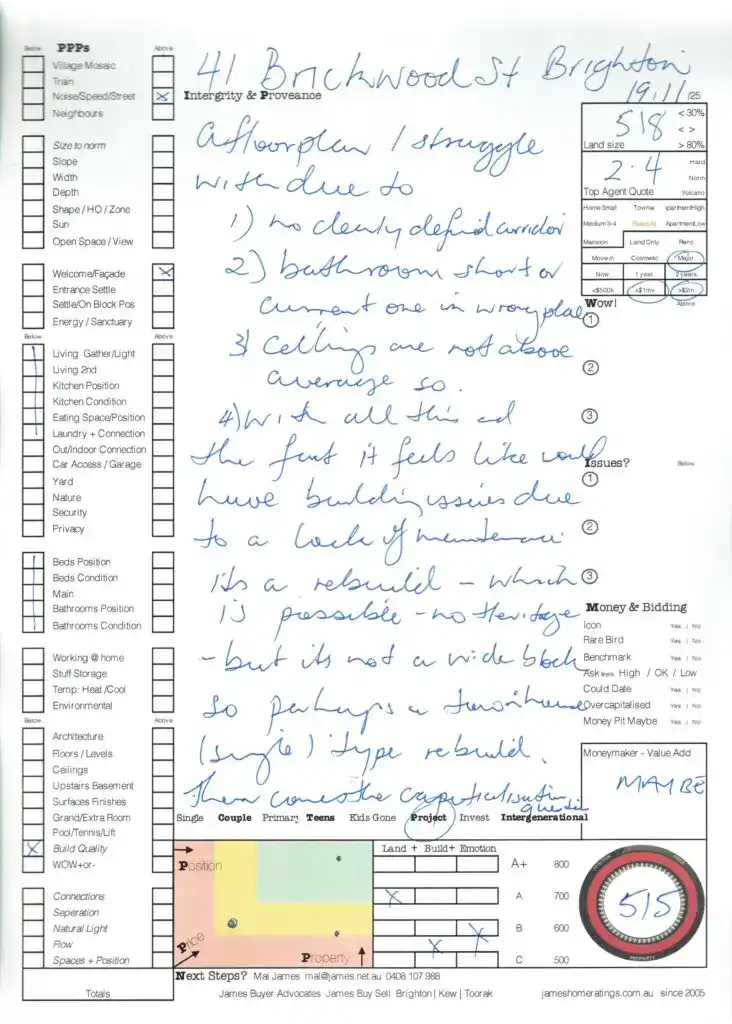
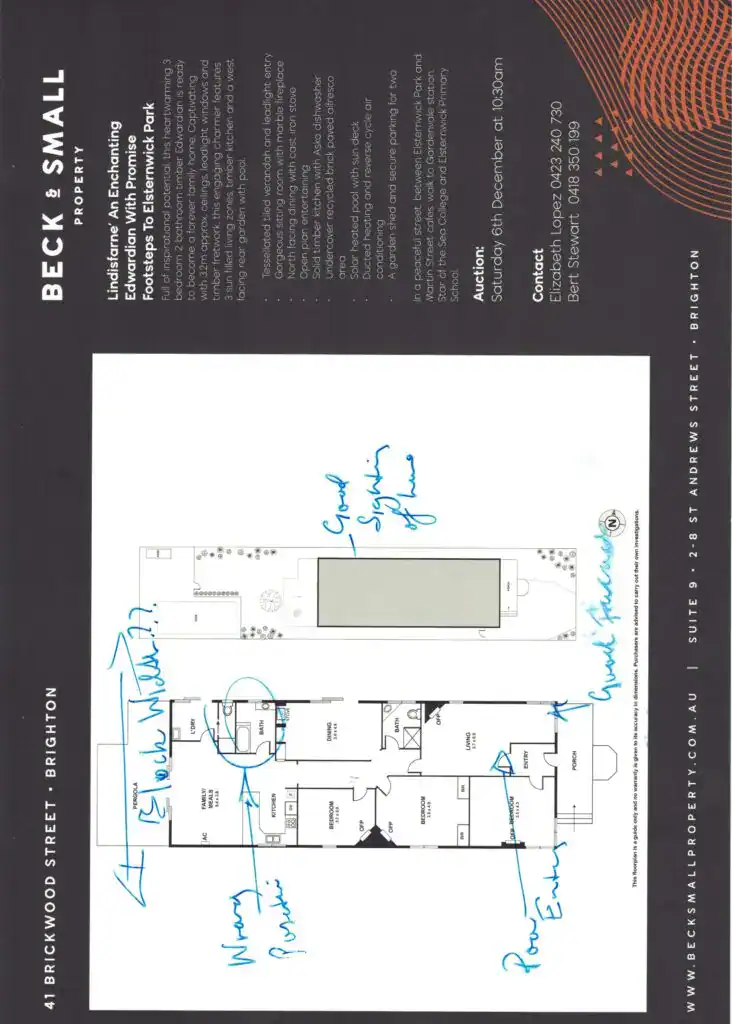
Behind its neat Brighton façade lies a home that asks for more than first impressions suggest. The charm is real — the quiet street, decent rear yard, and proximity to the Elwood border give it good “position DNA.” But the floorplan lacks flow: the entry feels undefined, the bathroom placement disrupts livability, and the home hasn’t been well maintained. Renovating could turn it around, yet the project’s depth would likely surprise even seasoned renovators. A smaller block and heavy work list push it toward townhouse territory rather than classic Brighton family home status .
A beautiful façade can be a “bait marker” — it draws you in but doesn’t tell the full story. What sits beneath the gloss determines long-term satisfaction and capital growth. Homes like this remind us that structure, flow, and maintenance carry more weight than surface charm. When the renovation list keeps growing, so does the real cost.
Thinking about a renovation, rebuild, or off-market Brighton move?
Let’s compare options before you dive in — clarity first, project second.
📞 Mal James 0408 107 988 | ✉️ mal@james.net.au | James Home Ratings

- Click Address through to Completed James Home Rating





James Home Ratings is a 25 year old, patented, 1500 buy/sells plus 1,000-point scoring system based on the 3 critical drivers of long-term property value:
Three Pillar Value Drivers
- POSITION — “Where money is attracted to”
Street appeal, precinct, orientation, land size, walkability, school zones - PROPERTY — “Where money is spent”
Flow, floorplan, architecture, renovation quality, future potential - PRICE — “What the market rewards”
Relative value vs price paid, cycle timing, agent positioning
Why It Works – Patterns
Because real estate, at its core, is about human behaviour—and history repeats itself.
Each home is scored independently and consistently, based on how it aligns with long-term demand and supply fundamentals for it’s specific area property type—that way you can compare a block of land with an apartment in different areas with different budgets..
A, B, C-Grade – Know the Difference
- A-Grade: Always in demand. Rare, proven, and resilient through market shifts.
- B-Grade: Good, but situational. Can work well when bought or sold smartly.
- C-Grade: Riskier. More emotion-driven, often overhyped, and harder to recover value.
What Others Do | What We Do |
Gut feel and emotion | Science and structure |
Agent spin and hype | Independent, consistent scoring |
Short-term trends | Long-term fundamentals |
Comparing apples to oranges | Same property type, different budgets, objectively assessed |
What the Scores Mean
- 500 – Maybe ok but it has serious issues to consider
- 600 – Average: Typical for many Inner Melbourne homes
- 700 – Above Average: Strong fundamentals, few weaknesses
- 800+ – Exceptional: A-Grade, no obvious dealbreakers, rare and highly sought-after
Know the difference, know your grade before you pay the price buying or selling.