
26 Shepherd Street Surrey Hills – James Buyer Advocates




26 Shepherd Street, Surrey Hills – Victorian canvas at (almost) land value
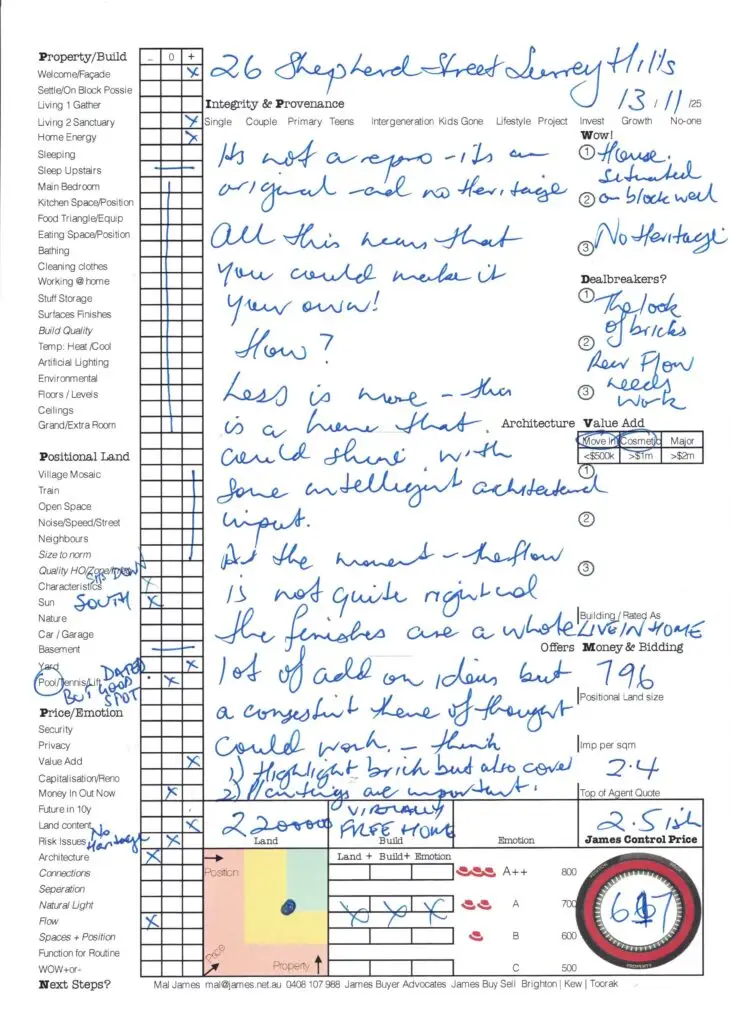
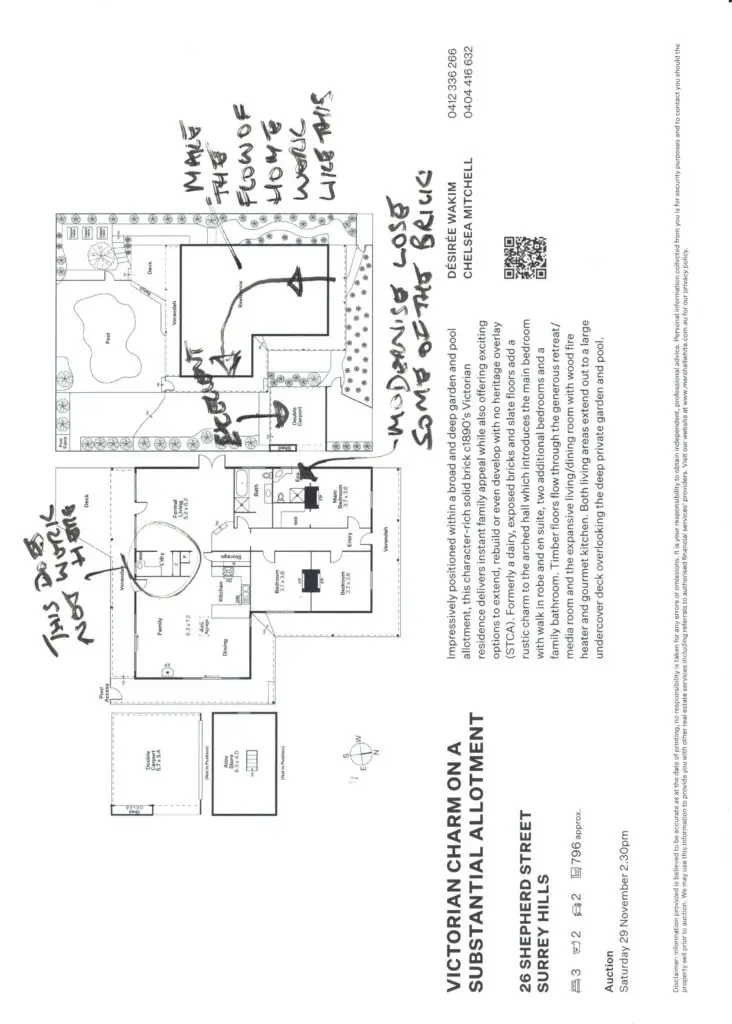
An 1880s Victorian with no heritage overlay on a broad, deep 769sqm (approx) block is rare – and that’s the real story at 26 Shepherd Street. The rooms are all there, the garden and pool give you scale, and the street/precinct feel right. Yes, it’s rustic: heavy brick, a dated rear terrace and pool area, a few level changes and a laundry that’s in the wrong spot. But you’re essentially paying close to land value and getting a live-in home with upside almost thrown in.
Where the opportunity really lies is in disciplined simplicity. Think “less is more”: highlight some of the feature brick, quietly cover the rest, modernise the main bedroom, and run one consistent floor finish from front door to back deck. Skylights down the hallway, better connection from kitchen/living to the garden, and some strong, green planting to soften the edges and frame the pool could completely change how this home feels without rebuilding it.
This is not for a scatter-gun renovator; it’s for a buyer prepared to work with a good architect, stage things sensibly, and respect the bones while lifting light, flow and finish. If you get that right, you’ve locked in the land, a character shell you’ve tailored to your life, and a price that stacks up against more “finished” but less flexible options nearby.
Want a ceiling price before you move? James Buyer Advocates / James Buy Sell — clarity → compare → negotiate. 0408 107 988.
- Click Address through to Completed James Home Rating


- Boroondara This Month
- Boroondara Rated & Sold


James Home Ratings is a 25 year old, patented, 1500 buy/sells plus 1,000-point scoring system based on the 3 critical drivers of long-term property value:
Three Pillar Value Drivers
- POSITION — “Where money is attracted to”
Street appeal, precinct, orientation, land size, walkability, school zones - PROPERTY — “Where money is spent”
Flow, floorplan, architecture, renovation quality, future potential - PRICE — “What the market rewards”
Relative value vs price paid, cycle timing, agent positioning
Why It Works – Patterns
Because real estate, at its core, is about human behaviour—and history repeats itself.
Each home is scored independently and consistently, based on how it aligns with long-term demand and supply fundamentals for it’s specific area property type—that way you can compare a block of land with an apartment in different areas with different budgets..
A, B, C-Grade – Know the Difference
- A-Grade: Always in demand. Rare, proven, and resilient through market shifts.
- B-Grade: Good, but situational. Can work well when bought or sold smartly.
- C-Grade: Riskier. More emotion-driven, often overhyped, and harder to recover value.
What Others Do | What We Do |
Gut feel and emotion | Science and structure |
Agent spin and hype | Independent, consistent scoring |
Short-term trends | Long-term fundamentals |
Comparing apples to oranges | Same property type, different budgets, objectively assessed |
What the Scores Mean
- 500 – Maybe ok but it has serious issues to consider
- 600 – Average: Typical for many Inner Melbourne homes
- 700 – Above Average: Strong fundamentals, few weaknesses
- 800+ – Exceptional: A-Grade, no obvious dealbreakers, rare and highly sought-after
Know the difference, know your grade before you pay the price buying or selling.