
August 25, 2026
An Age Article on Underquoting and a Young Agent Tas Bartels
Today’s article in The Age has generated significant attention, but I’m struck by what we don’t know. We have no idea what was actually said to the agent, Tas Bartels, by the person who recorded him.
Having read the article in The Age concerning Tas Bartels, I’m left with more questions than answers about whether the legal threshold for underquoting was actually met.
A Question of Fairness: Underquoting, Young Agents, and the Need for Context
Let me be absolutely clear from the outset: I oppose underquoting. If you’ve followed my writing over the past 20 years, you’ll know this isn’t a new position. Underquoting causes genuine pain to buyers. It wastes their time, drains their resources on building inspections and legal fees, and inflicts real emotional harm when they discover the property they’ve fallen in love with was never within their reach.
Just last week, I found myself in a heated negotiation where an agent had quoted a range, we offered within that range, and their counteroffer came back above it. I called it what it was, unacceptable, I wanted refunds of P&B fees and more. After considerable back and forth, we got their counter back within the quoted range. The property ultimately sold to someone else, but the principle mattered.
So no, I’m not here to excuse underquoting or diminish the legitimate frustrations of buyers who’ve been misled.
What the Law Actually Says
Under Victorian law, underquoting occurs when an agent provides a price estimate lower than one of three things:
- Their genuine opinion of the property’s value
- Any written offers already received
- The vendor’s stated asking price
This is important. The legal test isn’t simply “did the property sell for more than quoted?” Markets move. Competitive bidding pushes prices up. Sometimes vendors have unrealistic expectations and yes I acknowledge underquoting is widespread
Back to the article in today’s Age concerning young agent Tas Bartels,
I’m left with more questions than answers about whether the legal threshold for underquoting was actually met.
Consider what we don’t know:
- What price did the vendor want?
- Were there existing written offers?
- What did the agent genuinely believe the property was worth at the time of quoting?
The conversation quoted in the article shows a young agent discussing possibilities. “Probably” and “possibly” having a two in front of it. Speculating about potential outcomes.
Is this a statement of genuine valuation, or is it the kind of aspirational talk that happens when an agent is trying to win business in an incredibly competitive market?
The Bayside Reality
Anyone who works in the Bayside market knows it’s a challenging environment.
Agents compete fiercely for listings. Experienced operators know exactly how to frame conversations to win business.
Is it any surprise that a young agent, keen to secure a listing, might engage in some optimistic speculation about what could be achieved?
There’s a meaningful difference between:
- Putting $1.8–$1.95 million in writing as your quoted range, while verbally speculating that maybe, possibly, you might get more. I hear this line of talk every single day but what I trust is what I see in writing.
- Genuinely believing a property is worth $2.2 million and deliberately quoting $1.8–$1.95 million to mislead buyers
The first might be unwise. The second is illegal. I’m not convinced we have enough information to know which occurred here.
- What are the comparables, what was the property? We need more information to decide did he really think it was worth 1.8m to 1.95m and the rest is puffery or did he think it was worth more?
The Recording Concern
What troubles me also is the method by which these statements were obtained. A young agent, apparently speaking to someone he believed was a fellow professional—someone considerably more experienced—could (it’s not clear to me) have been led down a conversational path designed to elicit problematic statements.
We’ve all been in conversations where we’ve said things we later wished we could take back. Where we’ve engaged in the kind of professional banter that sounds terrible when quoted out of context. i.e. It’s unclear why he mentioned the CAV in that context, perhaps it was an attempt to impress someone more senior, but we can only speculate.
Does this excuse genuinely unlawful conduct? Of course not. But does it provide important context for evaluating statements made in what the agent believed was a puffery conversation?
Perhaps.
This was a professional to professional selling conversation NOT an agent to a buyer.
Proportionality and Fairness
So I think about the young man at the centre of this story. Stood down. Career hurt. Reputation temporarily damaged. The mental health toll this must be taking.
For what, exactly? Perhaps simply for saying some ill-advised things in a conversation where he may have been trying to impress someone? For quoting in writing a range that may or may not have aligned with comparable sales data -we don’t have that context?
Perhaps legitimately.
Again, I’m not saying no fault exists here. The cavalier attitude toward compliance he apparently expressed is concerning and he and his company will need to review his and their training and “attitudes” and I would minimise any puffery going forward if I was him.
This case is a reminder to all agents, young and old, that everything we say, even informally, can be taken seriously. Transparency, clear documentation, and caution in even aspirational conversations are critical.
But is a public shaming in a major metropolitan newspaper proportionate to the conduct? Eg is he a repeat offender or was this an unusual set of circumstances where perhaps he was out of his depth.
Does it actually solve the problem of underquoting, or does it simply make an example of someone who was perhaps less sophisticated than the person who did the recording?
What About Sellers?
In all the rightful concern for buyers—and their concerns are legitimate—we rarely discuss the other side of the equation. Vendors trust agents to achieve the best possible outcome for their property. An agent who deliberately underquotes risks attracting buyers who can’t afford the property while failing to attract those who can.
No vendor has ever thanked an agent for underselling or not selling their home.
What was said to Tas away from the recording by this vendors agent/lawyer about the sellers?
A Path Forward
If we’re serious about eliminating underquoting, we need systemic solutions:
- Better training for young agents entering the profession
- Enforcement that targets patterns of behaviour rather than isolated statements
- Recognition that verbal speculation about “dream prices” can differ from written representations on opinions of market value.
- Us, the old guard, to lead the young, by good example.
What we don’t need is the public humiliation of young professionals whose primary crime may ( and I am not sure but may) have been inexperience and poor judgment in trusting the wrong person.
Conclusion
To buyers who’ve been genuinely misled by underquoting: your frustration is valid. The practice is harmful and should be stamped out.
I am sorry and I know it hurts. My article here is not to belittle the damage it does when buyers dreams are dashed by lies.
But to those celebrating this particular article: before we hang this young man out to dry, can we be certain what occurred?
Can we be sure that his written quote didn’t reflect his genuine view of the market at the time? Can we be confident that the greater public interest is served by this kind of exposure?
I’m not certain. And in matters that can destroy careers and livelihoods, certainty should be our minimum standard.
I believe in accountability. I also believe in fairness, proportionality, and the presumption that people deserve the benefit of the doubt until the facts are clear.
The facts here are far from clear.
Disclaimer: This post represents my personal opinion based on publicly available information. It does not constitute legal advice. Anyone facing concerns about underquoting—whether as a buyer, seller, or agent—should seek independent counsel.
Disclaimer: I do not know Tas Bartels personally, only dealt with him professionally on a few occasions and found him always willing to please, suggest, try and help me as a buyers advocate and my clients as buyers.
Quick Snapshot Melbournes's Top End Market Mid November 2025
In Middle and Albert Park, A-Graders Can Still Ignite in a Cooling Pre Christmas Market
Where I Was, What I Saw
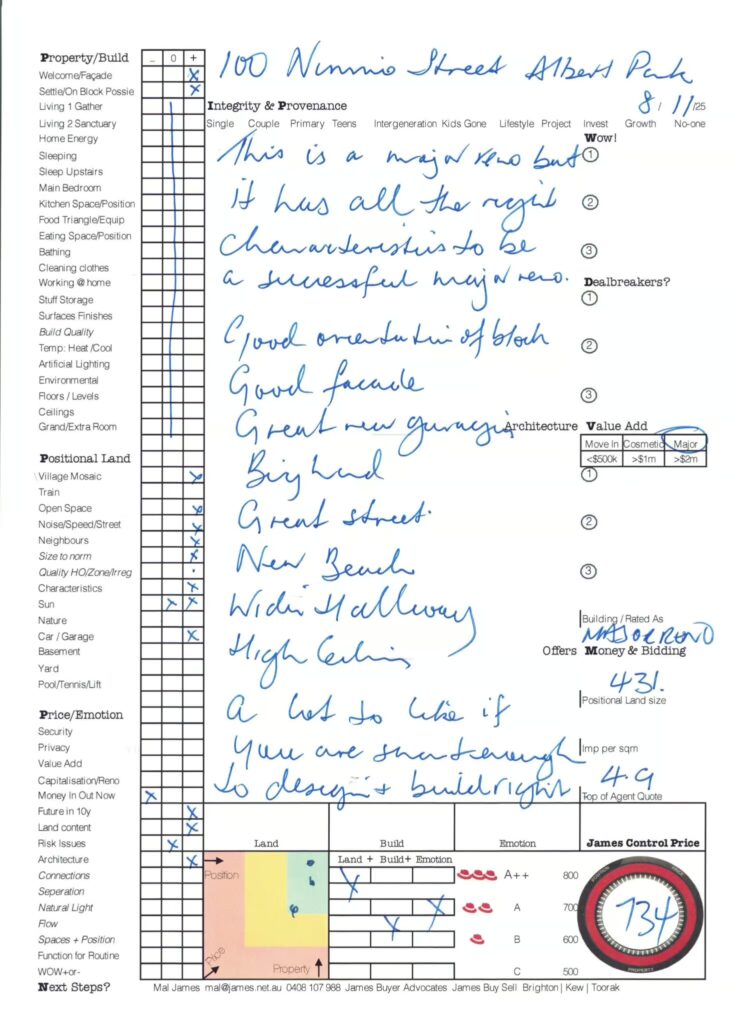
This week’s Market in Minute comes from the footpath of 100 Nimmo Street, Middle Park.
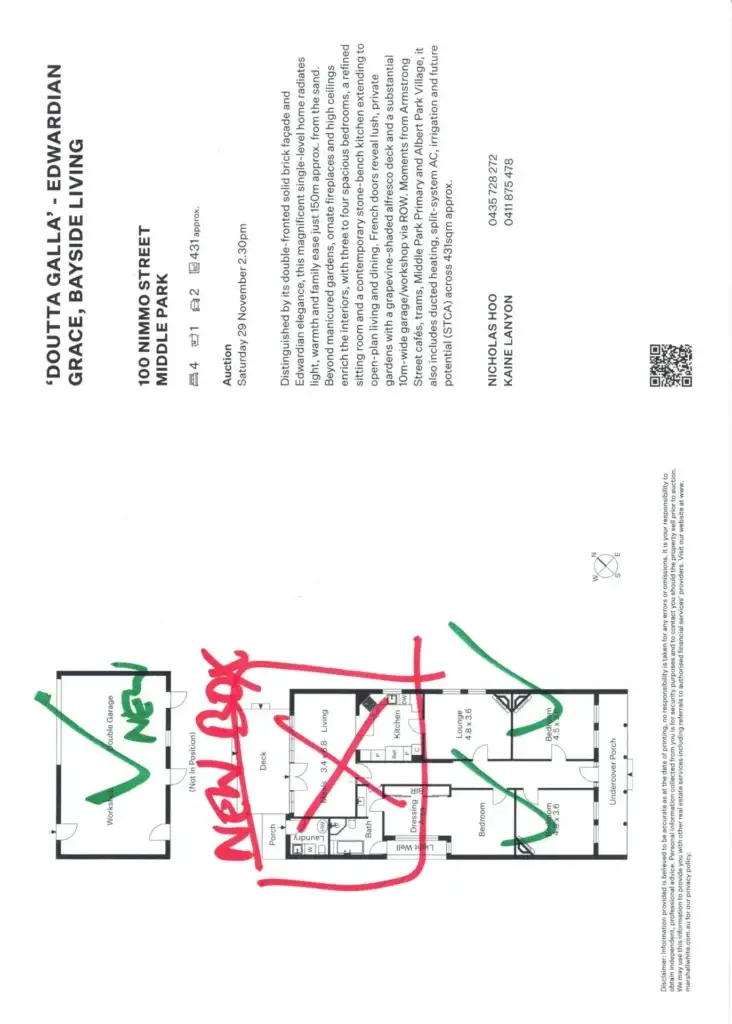
I first inspected this home a week or so ago. Initially quoted up to $4.9 million as an expression of interest (EOI), it had the classic Middle Park charm—a beautiful façade, prime location, and solid bones. But it also needed a serious renovation out the back.
Despite the work required, I rated it 734 on James Buy Sell’s internal scorecard (James Home Ratings). With strong rear access, street presence, a large block and quoted under $5m, it ticked all three “P’s”: Position, Property Type, and Price. That’s the holy trinity in high-end Inner Melbourne real estate—and this home had it.
What Happened: From EOI to Auction Explosion
In the first week (last Saturday) the property attracted a private offer of $5.32 million—around $300,000 above the top of the quoted range. In response, the agents (kudos to Nic Hoo, a sharp and principled operator) flipped it from EOI to a public auction just days later (Thursday just gone).
The auction? A volcano, meaning 4 bidders.
It was on the market and opened at that offer price and rocketed to $6.28 million. That’s $1.3 million above the initial guide, which to me seemed priced to sell but understandable.
What It Means: Three Market Signals
This single sale highlights strong, clear signals about where Melbourne’s prestige market is at:
- Port Phillip is a Standout Performer
While areas like Stonnington, Bayside, and Boroondara have cooled slightly in recent weeks, Port Phillip—especially Middle and Albert Park—is still as hot as an Australian Open semi-final. The emotional and financial energy remains strong in Port Phillip.
- EOIs Are on the Nose
This sale is a case study in why the market is pulling back from expressions of interest.
They’re viewed as opaque and outdated in the current climate. Meaning lack of trust. Public auctions—transparent, time-bound, competitive—are performing better. This switch unlocked another $800,000 for the vendors.
- A-Graders Still Drive Competitive Outcomes
Even in a softening market, true A-graders ignite demand. What defines an A-grader? It’s more than style—it’s substance: great location, solid architecture, strong land component, functional amenity (rear access, block width), and correct pricing. When those PPP (3P’s) elements align, competition follows.
Next Steps
📞 Call or text Sim or me Mal James directly
📧 mal@james.net.au or 0408 107 988

2 Kinane St, Brighton — iconic bay views, massive land. JHR 783 (A)
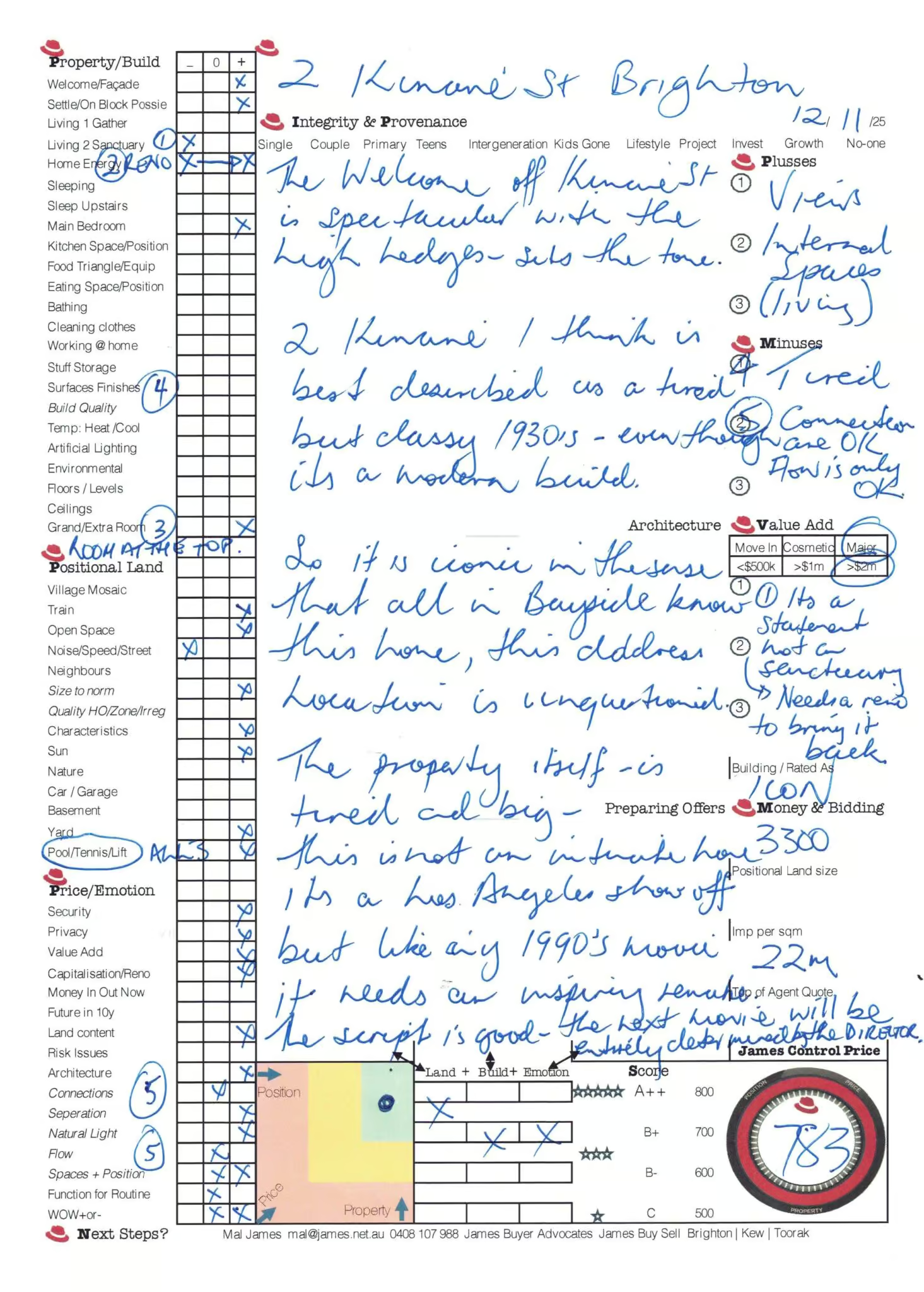
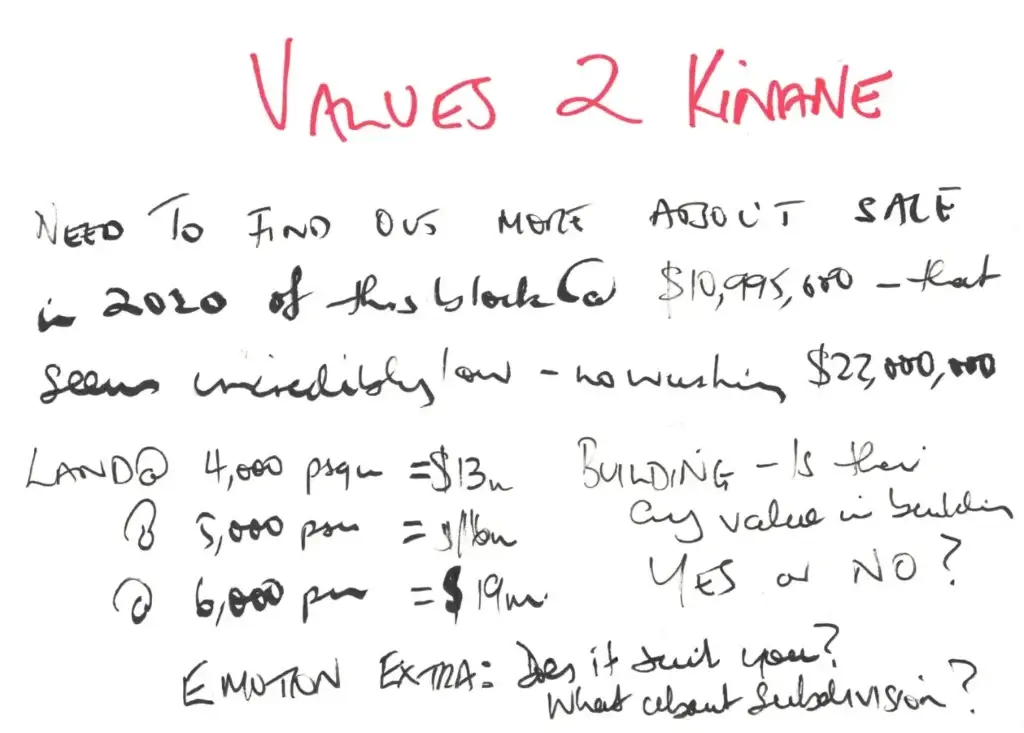
Position. One of Bayside’s true landmarks: ~¾ acre (circa 3,300sqm) on the cliff line with never-to-be-built-out water views. Spectacular hedge-lined arrival off Kinane; beach and foreshore trail at your feet. Privacy, prestige, and permanence are the drawcards here.
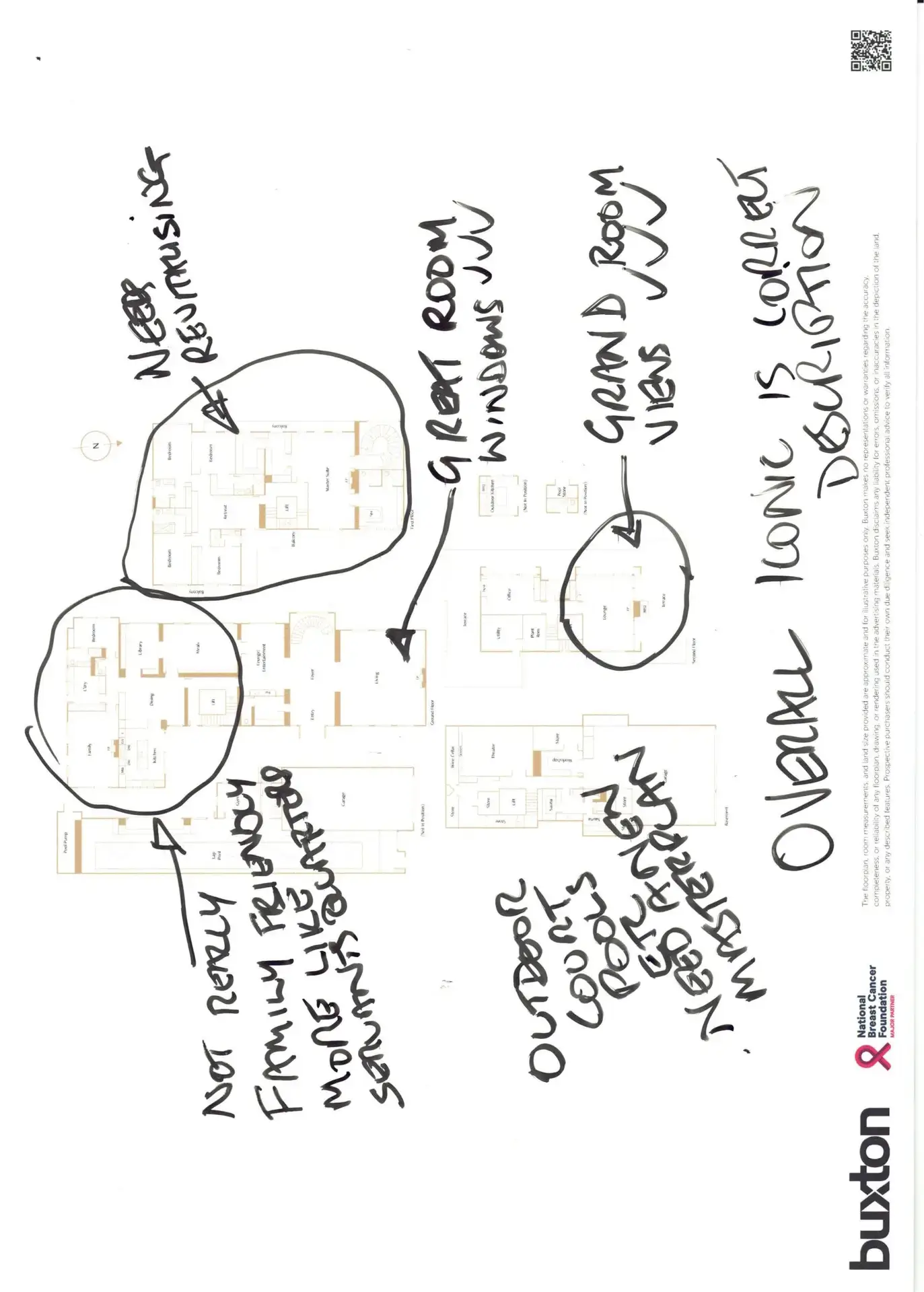
Property. Grand 1930s Los Angelos style showpiece but built a few decades ago with huge great room windows and a dedicated viewing/lounge that makes the most of the outlook. Tennis/pool domain and broad terraces suit entertaining at scale.
Inside, the southerly kitchen living plan reads more “estate/servants’ wing” than family-friendly; connections and bedroom zoning need a rethink. But the living spaces are grand capped off with the upper story lounge and balcony – you feel special. The fabric is sound but dated/clinical—this is a major renovation/master-plan exercise to modernise flow, warmth and everyday usability.
Price & play. Guide around $22m with further capex required; buy it for address + land + view security, then invest to create a contemporary family estate. Needs substantial work inside and outside to match its iconic status. Our James Home Rating: 783 (A) — blue-chip Position with a big-canvas Property that needs new direction.
Want tight comps and a ceiling price before you move
- Click Address through to Completed James Home Rating


> $3m Townie
circa $5m Apartment
> $3m Townie,


- We cover a lot of off-markets not up on this site
- Do you have an off-market for any of our James Buyer Advocacy clients?
| 3.5m | Brighton | Church St Precinct | Apartment |
| 1.8m | East Melbourne | Apartment | |
| 2m | Carnegie | to Richmond | Townhouse |
| 7m | Armadale – | Malvern Larger block and family home | Bigger yard, will reno |
| 6m | Camberwell Hawthorn | Camberwell Hawthorn | Renovation Value Add up to $2m |
| 1.2m | Caulfield | Anderson Park Area | Townhouse for single |
| 2.7m | Prahran | South Yarra, | Small home |
| 4.5m | Hawthorn | Malvern | Family Home |
| 3m | Surrey Hills, | Mont Albert Canterbury | Family Home |
| 3.2m | Mont Albert | Surrey Hills, Canterbury | Family Home |
| $5m | Near Camberwell Grammar | Canterbury, Balwyn | Modern Family Home |
If you do great – we can come and have a look. Simone 0400304111 or Mal 0408107988


Lorem ipsum dolor sit amet, consectetur adipiscing elit. Ut elit tellus, luctus nec ullamcorper mattis, pulvinar dapibus leo.